Jiménez
Cry MachoJiménez is a horse trader in Janasco who buys mustangs from Mike and helps turn the difficult work of catching them into a source of money. His importance comes into focus when he refuses Mike’s chestnut horse on Porfirio’s advice, then changes course after Rafo rides the animal. The shift makes Jiménez a practical measure of the horses’ marketability and a witness to Rafo’s unexpected skill.
Identity and Role
Jiménez appears as a local trader who examines horses and pays for them. The narrative gives little personal background and no independent account of his motives; his character is drawn chiefly through transactions and through his place in the dispute between Mike and Porfirio. He is not simply a buyer who accepts whatever Mike brings. The sales establish that he checks whether animals are healthy, and the dispute over the chestnut shows that a horse’s usefulness to a future rider matters as well.
That role gives him a concrete place in the group’s precarious economy. Mike and Rafo catch mustangs, while Jiménez supplies a buyer and a negotiated price. His decisions determine whether the effort invested in an animal produces cash. He does not control the whole process: Porfirio can influence what he is willing to buy, and Rafo’s riding can alter his judgment. Jiménez is therefore both a point of exchange and a participant in the local relationships that govern exchange.
Purchases and the Mustangs’ Market
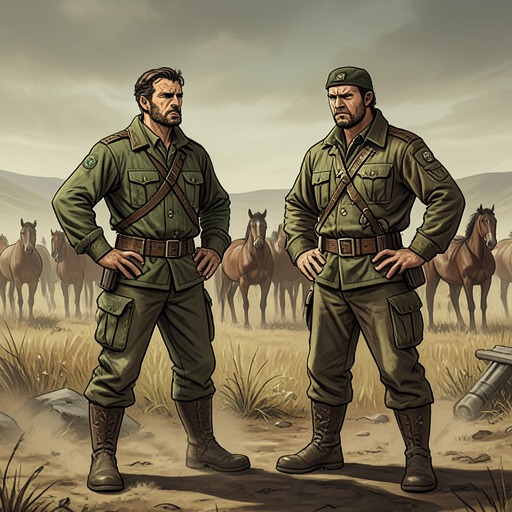
After Mike and Rafo bridle a gray mustang, Mike rides it for nearly two hours. They tether the horse to the truck, drive down to the alameda, and sell it to Jiménez for two hundred pesos. The account presents the sale as a straightforward result of work: the horse has been handled and ridden, and Jiménez pays for it. The amount gives a specific measure of what one sale can bring, rather than leaving the mustang trade as a vague means of support.
Later, Mike catches two sorrels alone and, with Rafo, ropes a bay stallion. Jiménez inspects the three animals for health and lesions, then pays six hundred pesos. By this point, the price of mustangs has been set, so there is no need for bargaining. The transaction shows a recurring arrangement taking shape: Jiménez’s inspection and payment provide a predictable return, and Rafo can ask how much money they have as they drive away. Their count is then over seven hundred pesos. The money is consequential within the scene because the sales make the proceeds of their work visible and countable.
The Chestnut Dispute
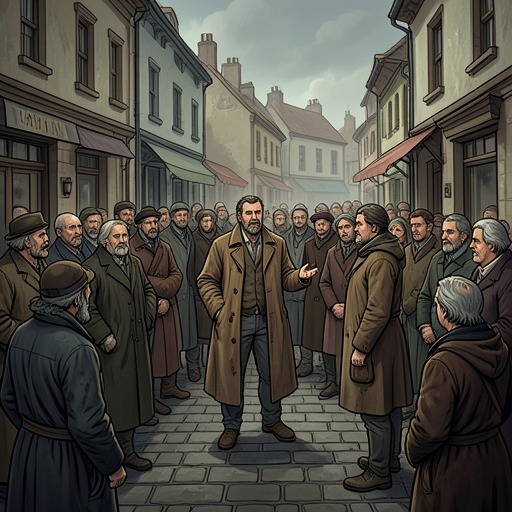
The arrangement breaks down when Mike brings Jiménez a particularly beautiful chestnut mustang. Jiménez refuses to buy it. The refusal is connected to Porfirio, who stands with Jiménez and Rafo outside the forge while the three argue. Mike cannot understand what they are saying and initially does not know what the quarrel concerns. The scene puts him at a disadvantage: the decision about his horse is being made in a conversation he cannot follow.
Porfirio later explains his objection by contrasting his own horses with Mike’s. He says he has spent weeks making his horses less wild so that someone can ride them, whereas Mike’s horses remain wild and could cost a buyer money. He presents this as the reason he warned Jiménez against buying from Mike. Jiménez himself does not explain the refusal in the recorded exchange. He remains silent, and Mike reads his set jaw as confirmation that the trader shares Porfirio’s position. The evidence thus links Jiménez’s decision to a concern about whether a horse can be sold on to someone able to ride it, though the argument reaches the reader through Porfirio rather than through Jiménez’s own words.
Rafo’s Ride and Jiménez’s Change of Judgment
The dispute changes when Rafo rides the chestnut. After hearing a shout, Mike, Porfirio, and Jiménez rush into the street and see the boy on the horse. The mustang runs, stops, rears, and bucks; Rafo remains mounted through three circuits of the alameda without losing control. Mike understands from Jiménez’s shouting that the trader will now buy the animal. Jiménez’s response is conveyed through Mike’s recognition rather than through a quoted statement from the trader.
The episode overturns the practical claim behind the refusal. Porfirio has argued that Mike’s horses are not rideable; Rafo demonstrates, in public, that this chestnut can be ridden. The horse’s value is no longer only a matter of its appearance or Mike’s assurances. Jiménez’s change of judgment follows an observable demonstration that answers the stated concern. Rafo then comes back on the sweating horse and tumbles off without waiting for help. Mike embraces him; the two laugh and strike one another playfully. Jiménez’s willingness to buy is part of the reversal that makes Rafo’s success consequential beyond the ride itself.
Narrative Significance
Jiménez has a limited but distinct function: he connects the work of catching horses to its material reward, while his changing decisions expose the standards by which that work is judged. The two-hundred-peso sale, the six-hundred-peso payment for three inspected animals, and the dispute over the chestnut show both the emerging regularity of the trade and its vulnerability to local disagreement. The fixed price allows Mike and Rafo to count on a return, but it does not guarantee that every horse will be accepted.
The chestnut’s sale also makes Jiménez an unwitting judge of Rafo’s competence. He does not train or encourage the boy in the scene; rather, his initial refusal establishes a test that Rafo’s ride unexpectedly meets. Jiménez’s practical decision thereby registers a change in how the horse—and Rafo’s ability—can be valued. His sparse characterization suits this function: the narrative offers no private history, only inspection, payment, silence during the dispute, and a change of mind made legible through action.